Why it matters
A fruit tree is a long-term planting decision involving climate, rootstock, pollination, and space. A small nursery tree can conceal a large mature canopy. Choosing the right tree and site reduces future pruning and support problems.
What you’ll need
Tools
- Spade
- Watering can
Materials
- Locally suitable nursery tree
- Mulch
Before you begin
Safety & limits
- Locate utilities before digging. Seek qualified help for large trees or unstable ground.
Work carefully, in order
The method
- 01
Match tree to place
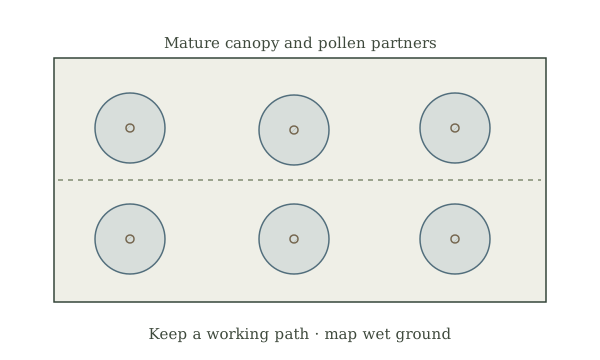
Ask a reputable local nursery about climate suitability, mature size, rootstock, pollination partners, and disease considerations. Check overhead and underground services. Make sure the mature canopy and roots have appropriate room.
- 02
Inspect the nursery plant
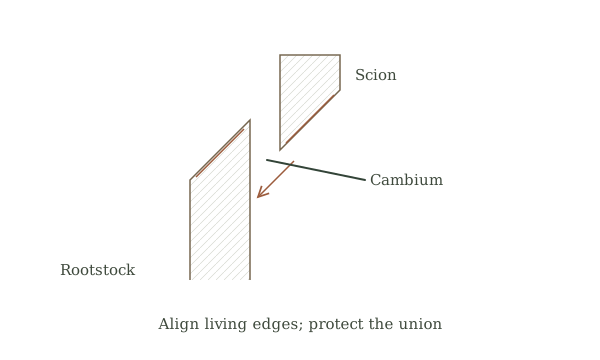
Look for a healthy graft union, sound bark, and a root system suitable for planting. Ask how the tree was grown and how to manage circling roots or bare-root storage. Do not let exposed roots dry while preparing the site.
- 03
Prepare by local guidance
Follow the nursery or extension planting instructions for that root system and soil. Locate the root flare rather than using the top of potting material as an automatic depth guide. Keep the graft union at the recommended position above soil.
- 04
Backfill and water
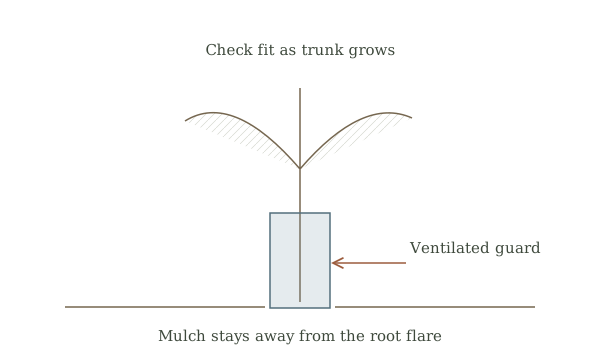
Set the tree at the correct depth, settle backfill without severe compaction, and water according to the establishment plan. Avoid a deep amended planting pocket that behaves differently from surrounding soil. Keep mulch away from direct trunk contact.
- 05
Monitor establishment
Check moisture in the root zone, not only the surface. Use staking only where required and inspect ties so they do not constrict growth. Keep a watering record and obtain advice about formative pruning appropriate to the species and season.
Mistakes to avoid
- Planting too deeply
- Piling mulch against the trunk
- Ignoring mature size or pollination needs
If it isn’t working
Tree rocks in wind
Assess root stability and suitable temporary support.
Leaves wilt
Check actual soil moisture and root condition before adding more water.
Then & now
Historical context
Orchards depended on long-term observation and selection; nursery rootstocks make mature size more predictable.
The modern equivalent
A container-grown dwarf tree can suit some spaces but needs its own care plan.
Sources & review
Editorial draft — specialist review pending. Written 2026-09-20. Sources support the stated scope; this page has not been professionally certified.
This entry describes general practice. A topic-specific source review is still required before it can be marked reviewed.
How this manual handles evidence →