Why it matters
A pantry works when food can be seen, reached and checked without unloading everything. Shelf depth, cleaning access and actual stored weight matter together. A capacity worksheet prevents an attractive layout from hiding an overloaded support system.
What you’ll need
Tools
- Tape measure
- Notebook
- Scale for weighing representative containers
Materials
- Instructions and load limits for the selected shelving system
- Stock labels
- Clean suitable food containers
Before you begin
Safety & limits
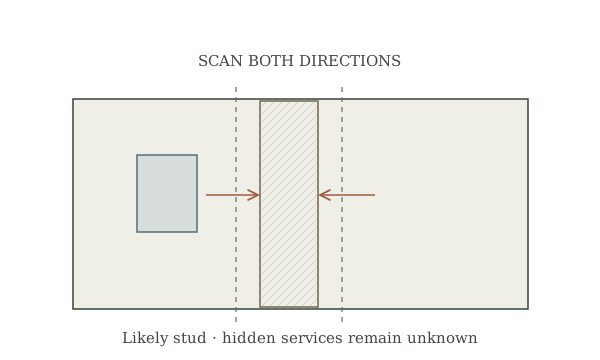
- Use an assessed shelving system and follow its assembly and anchoring instructions. A wall-mounted shelf needs fixings suited to the actual wall and load. Check concealed services before drilling. Heavy items can fall and units can tip; do not climb shelves. Unknown supports, damaged units and custom spans need qualified assessment.
Work carefully, in order
The method
- 01
Inventory the intended stores
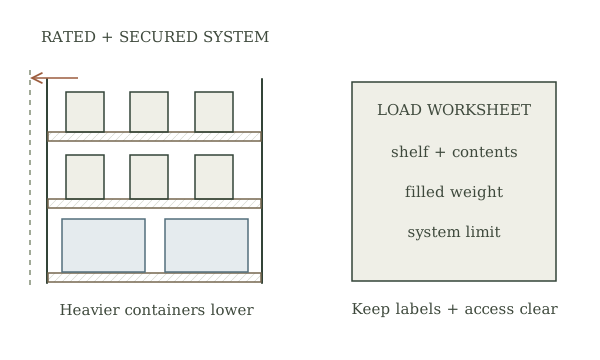
List food types, container dimensions and typical quantities. Weigh representative filled containers rather than estimating from an empty jar. Separate daily-use stock from reserves. Record the total intended load for each shelf and the access needed to remove a container safely.
- 02
Measure the space and access
Sketch the door, aisles, cleaning access and usable wall or floor area. Check for dampness, heat sources and pests before installing storage. Mock up shelf depth with cardboard; confirm that labels remain visible and the back can be cleaned without unsafe reaching.
- 03
Select a rated system
Match shelf dimensions and intended loads to the manufacturer’s limits, including any limits on the whole unit. Record how loads must be distributed and how the unit is secured. Obtain assessment for custom shelving or uncertain wall construction rather than guessing a bracket spacing.
- 04
Install and inspect before loading
Have the unit assembled and anchored as specified, with suitable fixings and checks for services. Confirm supports, locking parts and shelf seating. Record the instructions and installed configuration. Do not use a person standing or climbing on the shelf as a capacity test.
- 05
Arrange for safe rotation
Keep heavier containers on lower shelves and food off damp floors. Group compatible foods in labelled sections with older stock accessible first. Leave space to see labels, inspect packaging and clean around the unit. Keep household chemicals separate from the food storage area.
- 06
Review loads and condition
As quantities change, update the shelf worksheet and stay within the rated configuration. Check for sagging, loose supports, damp packaging and pests. Remove a damaged unit from service safely and seek assessment. Rotate food according to its storage guidance; shelf organisation cannot rescue spoiled food.
Mistakes to avoid
- Planning by jar count without weighing filled containers
- Treating a bracket rating as the rating of the whole system
- Packing shelves too deeply to inspect
If it isn’t working
A shelf sags or supports loosen
Keep people clear and unload safely if possible; have the cause assessed before reusing it.
Food repeatedly disappears at the back
Reduce depth or use a labelled container system while retaining cleaning access and the permitted load distribution.
Then & now
Historical context
Pantry shelves kept household stores organised and off damp surfaces. Modern shelving adds published capacities and adjustable fittings, but stock rotation remains a household habit.
The modern equivalent
Rated adjustable shelving, a shelf-load record and visible first-in-first-out stock organisation.
Sources & review
Editorial draft — specialist review pending. Written 2026-09-30. Sources support the stated scope; this page has not been professionally certified.
- Utah State University Extension — Food Storage in Home ↗
Clean, dry storage, food off the floor, pest protection and stock rotation; no universal humidity target adopted. Checked 2026-09-30.
- US Consumer Product Safety Commission — Anchor It ↗
Furniture anchoring and placing heavier items on lower shelves. Checked 2026-09-30.
- IKEA — Wall Anchoring Guide ↗
Fixings must suit the actual wall; follow instructions for the selected shelving system. Checked 2026-09-30.