Why it matters
An inventory prevents forgotten bulk food from deteriorating and helps match stores to meals people actually eat. Dates and package condition matter together; an old label cannot make a compromised package safe.
What you’ll need
Tools
- Notebook or simple spreadsheet
- Marker
- Shelf labels
Materials
- Existing pantry items
- Food-grade containers as needed
Before this skill
- Kitchen Hygiene
Before you begin
Safety & limits
- Never taste suspect food to decide whether it is safe. Bulging, leaking, wet, moldy or pest-infested packages need a product-specific discard decision.
- Do not give homemade canned foods a new shelf life by changing a date label; follow the complete tested recipe and storage guidance.
Work carefully, in order
The method
- 01
Survey every shelf
Write down each product, package count, lot or purchase date, and the condition of its container. Check behind and below shelves for leaks, moisture, droppings or insects while moving products into view.
- 02
Group by storage needs
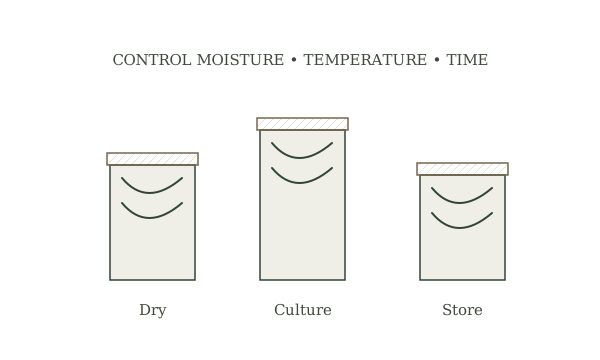
Separate dry shelf-stable foods from products that require refrigeration after opening. Keep allergen information and original instructions with repackaged food, and do not combine unidentified old and new lots.
- 03
Set a usable order
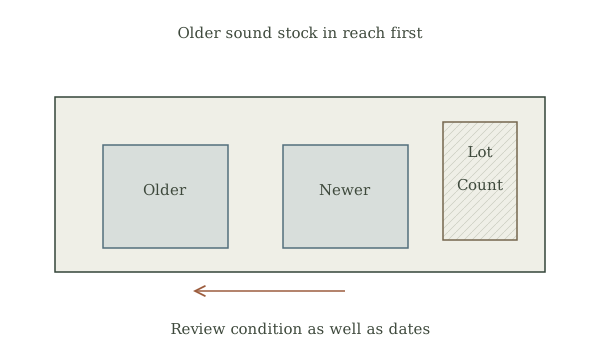
Place sound older food where it can be reached first and new packages behind it, while keeping labels visible. Plan meals around food already on hand and note which staples the household rarely uses.
- 04
Review on a schedule
Update the count as food is used, inspect packaging and shelves regularly, and replace only useful supplies. If an item is recalled or its handling history is uncertain, use official product-specific guidance rather than a generic date rule.
Mistakes to avoid
- Buying bulk food nobody cooks.
- Recording quantities once and never checking package condition.
- Covering original safety instructions when relabeling.
If it isn’t working
The same product has several dates
Identify each lot and use older sound stock first while applying its own package instructions.
A can or dry package is compromised
Set it aside, check authoritative guidance for that product and do not serve it based on smell or appearance.
Then & now
Historical context
A household larder was a working stockroom. Frequent counting and moving older sound supplies forward kept the stored harvest visible rather than treating shelves as an archive.
The modern equivalent
A one-page inventory or spreadsheet makes an old larder practice accessible without a specialized app.
Sources & review
Editorial draft — specialist review pending. Written 2026-09-24. Sources support the stated scope; this page has not been professionally certified.
- Utah State University Extension — Take stock before restocking ↗
Inventory, practical purchasing, rotation and pest checks. Checked 2026-09-24.
- Utah State University Extension — Food Storage in Home ↗
Food-grade dry storage, temperature, moisture, packaging and pantry rotation. Checked 2026-09-24.