Why it matters
The first decision is whether a wound belongs in minor home care at all. Stopping bleeding and using clean water and a clean covering reduces contamination; deep damage, retained objects or infection need clinical assessment.
What you’ll need
Tools
- Phone
- Disposable gloves
Materials
- Clean running or bottled water
- Soap for hands and surrounding skin
- Sterile dressing or clean cloth
- First-aid kit
Before you begin
Safety & limits
- Call local emergency services for uncontrolled or spurting bleeding, a deep or large wound, lost sensation or movement, or an embedded object. Do not remove embedded objects, stitch a wound or delay care to read this page. The method below concerns a small superficial cut after serious injury has been excluded.
Work carefully, in order
The method
- 01
Check safety and severity
Move away from the cause without entering an unsafe scene. Look for heavy bleeding and major injury first. Ask permission to help a responsive person. If the wound is deep, function is affected or bleeding will not stop, call for emergency help and follow the Bleeding Control guide and dispatcher.
- 02
Use clean hands and pressure
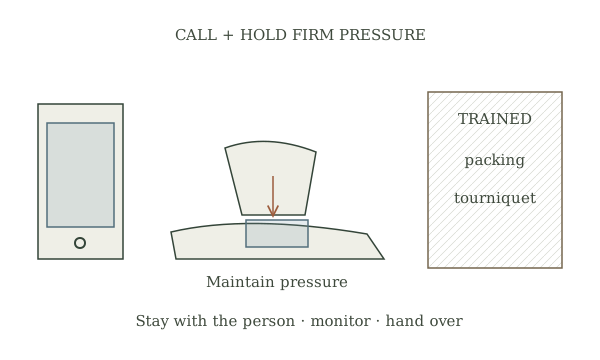
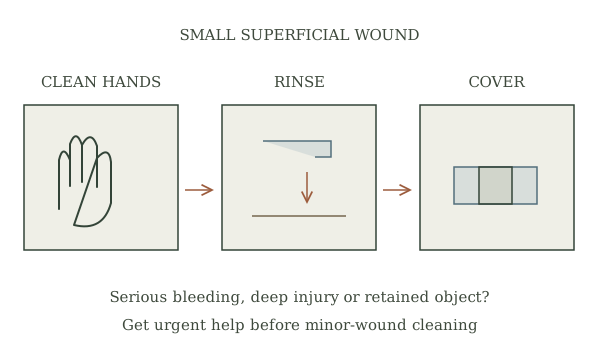
Wash and dry your hands and use gloves when available. For a small bleeding cut without an embedded object, hold a clean dressing firmly over it until bleeding stops. Do not keep lifting it to look. Persistent bleeding changes the plan from cleaning a minor wound to getting urgent help.
- 03
Rinse the small wound
Once bleeding has stopped, rinse a small superficial wound with clean tap or bottled water. Clean surrounding skin with soap and water without rubbing contamination into the wound. Do not dig into tissue. Dirt that remains, a puncture or a bite requires medical advice rather than increasingly aggressive scrubbing.
- 04
Cover without constriction
Gently dry the surrounding area with clean material and apply a sterile dressing suited to the wound. Keep adhesive on intact surrounding skin. A bandage should hold the dressing without making the hand or foot numb, cold or discoloured. Seek help if you cannot cover it appropriately.
- 05
Watch the healing area
Keep the covering clean and dry and change it when wet or dirty. Observe increasing pain, swelling, warmth, spreading redness, discharge or feeling unwell; seek prompt clinical advice. Infection can be harder to judge by colour alone on darker skin, so changes in tenderness and swelling matter too.
- 06
Arrange follow-up and restock
Ask a clinician about tetanus protection or bite-related care when relevant; vaccination needs depend on the wound and history. Record the injury and care for handover. Replace used kit items and review what caused the injury so the same tool, sharp edge or work setup does not injure someone else.
Mistakes to avoid
- Cleaning a wound before controlling serious bleeding
- Pulling out an embedded object
- Covering a dirty puncture without assessment
If it isn’t working
Bleeding continues
Maintain direct pressure and call for urgent help; do not postpone the call to finish cleaning.
Pain, swelling or discharge increases
Seek prompt medical assessment rather than applying another household remedy.
Then & now
Historical context
Modern wound care replaced many irritating folk treatments with clean handling, dressings and clinical assessment. Traditional salves are not a substitute for safe first aid.
The modern equivalent
Clean minor-wound care with modern dressings and clinician-directed vaccination or infection management.
Sources & review
Editorial draft — specialist review pending. Written 2026-10-05. Sources support the stated scope; this page has not been professionally certified.
- NHS — Cuts and Grazes ↗
Minor wound rinsing and covering, serious-wound signs, infection and tetanus assessment. Checked 2026-10-05.
- American Red Cross — Wounds ↗
Scene safety, consent and persistent bleeding response. Checked 2026-10-05.