Why it matters
A small leak becomes harder to manage when the valve is hidden or seized. Locating controls in advance is useful, but old valves can fail when forced. The task is identification and a planned check, not dismantling plumbing.
What you’ll need
Tools
- Flashlight
- Phone camera
Materials
- Water-supply map
Before you begin
Safety & limits
- Major plumbing and electrical hazards require qualified professionals.
Work carefully, in order
The method
- 01
Identify the supply
Ask the property owner or plumber where the household main shutoff is and what it controls. Apartments, wells, fire-sprinkler systems, and shared supplies may have different arrangements. Do not assume a street-side utility valve is yours to operate.
- 02
Map local controls
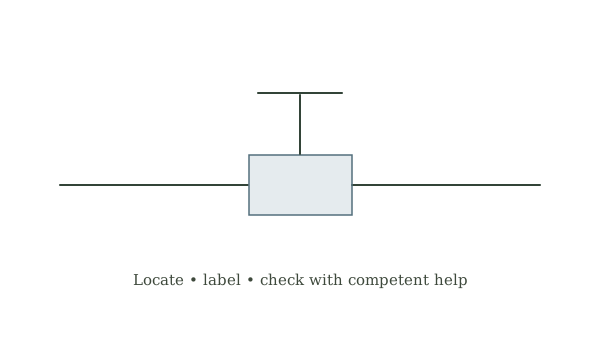
Locate accessible isolation valves for sinks, toilets, and appliances. Photograph each and label the fixture it serves. Keep the path to the main valve clear of storage and make the information available to other household members.
- 03
Inspect before touching
Look for corrosion, leakage, or a damaged handle. If a valve appears fragile or has not moved for years, arrange a plumber’s inspection. Do not add a long lever to force it; breaking the valve can worsen the problem.
- 04
Plan a controlled check
When appropriate, have a competent person demonstrate the correct operation at a convenient time, with occupants informed. Know how to restore service and identify any appliance procedures that apply. Record the verified position rather than guessing from handle orientation alone.
- 05
Use the plan during a leak
If safe, isolate the relevant supply and call for repair. Keep clear of water near electrical equipment and do not enter flooded spaces. A shutoff controls incoming water but does not remove water already stored in pipes or tanks.
Mistakes to avoid
- Forcing a seized valve
- Turning shared or fire-system valves casually
- Storing boxes in front of the main control
If it isn’t working
Valve leaks when moved
Stop and call a plumber.
Water continues
Check whether it is residual water or the wrong supply, with professional help.
Then & now
Historical context
Knowing household controls is a practical counterpart to the older skill of carrying and storing water.
The modern equivalent
Leak detectors and automatic shutoff systems can help but still need correct installation and maintenance.
Sources & review
Editorial draft — specialist review pending. Written 2026-09-20. Sources support the stated scope; this page has not been professionally certified.
This entry describes general practice. A topic-specific source review is still required before it can be marked reviewed.
How this manual handles evidence →