Why it matters
Perennial herbs return from established roots or woody crowns, but hardiness varies with species, cultivar and local winter conditions. A labeled planting makes kitchen harvest easier and avoids confusing edible herbs with unrelated plants. This guide is for culinary use, not a medicinal or wild-foraging instruction.
What you’ll need
Tools
- Trowel
- Notebook
- Pruners
Materials
- Labeled culinary herb plants
- Plant labels
- Mulch
Before you begin
Safety & limits
- Use only positively identified, food-grade culinary plants; do not use this guide to identify wild herbs.
- Check allergies and interactions before any non-culinary use with a qualified professional.
Work carefully, in order
The method
- 01
Select confirmed plants
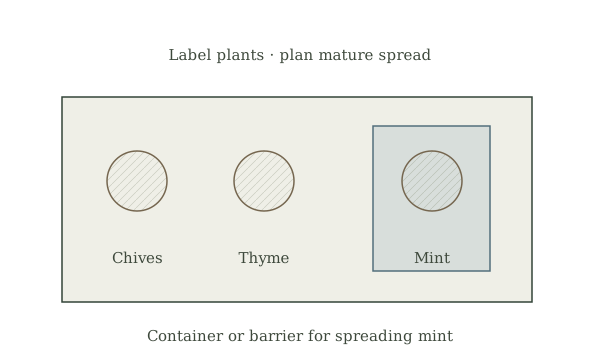
Buy correctly labeled plants from a reputable nursery and verify local hardiness. Choose a small set such as chives, thyme, oregano or sage according to light and drainage at the site. Mint can spread aggressively, so give it a contained position rather than inserting it among slower herbs.
- 02
Map light and drainage
Observe sun exposure and water after rain, then group plants with compatible needs. Check mature spread so paths remain accessible and low plants will not be buried beneath larger neighbors. Avoid planting culinary herbs where soil may be contaminated or frequently sprayed.
- 03
Plant and label
Follow the nursery and local extension guidance for planting depth and spacing. Water the root ball, settle the soil gently and leave the crown at the appropriate level. Label both common and scientific names where available, and record any cultivar or source information.
- 04
Harvest conservatively
Use clean scissors to take small amounts from healthy plants and keep enough growth for recovery. Avoid harvest from moldy, chemically treated, or misidentified material. Some woody herbs and leafy herbs differ in where to cut; consult species-specific guidance instead of shearing every plant alike.
- 05
Prepare for winter and renewal
Check local guidance for mulching hardy perennials and protecting crowns without trapping excessive moisture. Record winter survival and replace failed plants with locally adapted stock. Divide or prune only at the species-recommended time, and reassess any spreading plant before it crowds neighboring beds.
Mistakes to avoid
- Treating basil as a reliably hardy perennial in a cold climate
- Planting spreading mint without containment
- Using a plant without confirming its identity
If it isn’t working
A woody herb dies over winter
Recheck the plant’s hardiness and drainage, then choose a suitable cultivar or seasonal container approach.
Mint escapes its bed
Remove rhizomes thoroughly and use an appropriate contained planting with regular inspection.
Then & now
Historical context
Kitchen gardens kept a few familiar herbs near the door for repeated small harvests across the growing season.
The modern equivalent
Nursery labels and regional hardiness data help choose culinary herbs for a specific garden.
Sources & review
Editorial draft — specialist review pending. Written 2026-09-27. Sources support the stated scope; this page has not been professionally certified.
- UMN Extension — growing herbs in home gardens ↗
Supporting reference; consult the original for species and local details. Checked 2026-09-27.
- UMN Extension — mulching and perennial overwintering ↗
Supporting reference; consult the original for species and local details. Checked 2026-09-27.


