Why it matters
A hedgerow can provide pollinator forage, wildlife shelter and a more resilient edge to a field. Its benefits depend on local species, flowering sequence, land use and ongoing control of invasive plants. It is not automatically a livestock fence or a substitute for a designed windbreak.
What you’ll need
Tools
- Site map
- Plant list
- Notebook
Materials
- Locally suitable shrubs and perennials
- Mulch
- Water for establishment
Before you begin
Safety & limits
- Check property lines and utility corridors before planting. Avoid species regulated as invasive locally.
- Do not rely on a hedgerow to contain livestock or protect roads without a separate approved fence and sight-line assessment.
Work carefully, in order
The method
- 01
Name the edge's purpose
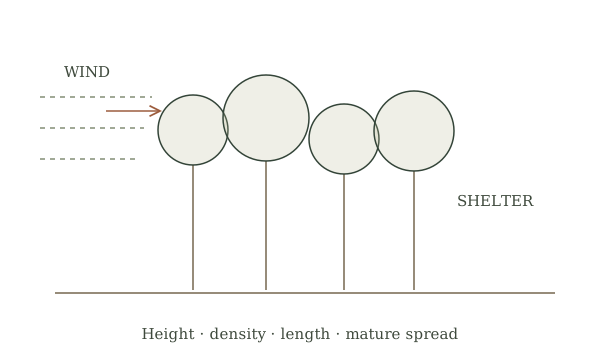
Choose whether the priority is pollinator forage, wildlife cover, a field boundary or wind moderation. Mark access lanes, gates, sight lines, drainage and adjacent crops. Leave room to reach both sides for establishment and future care.
- 02
Observe existing habitat
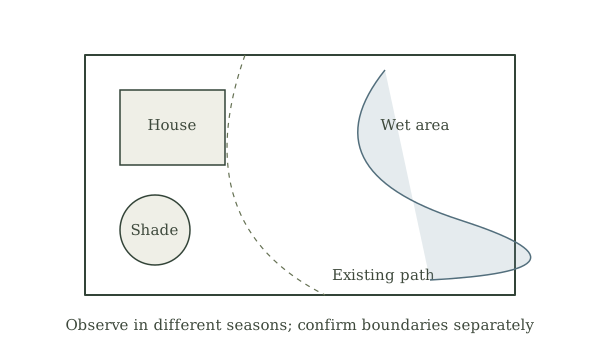
Record sun, soil moisture, nearby native vegetation and existing nesting or travel routes. Retain useful vegetation where practical rather than clearing a whole edge first. Check for invasive plants whose seed could spread during disturbance.
- 03
Choose a local plant mix
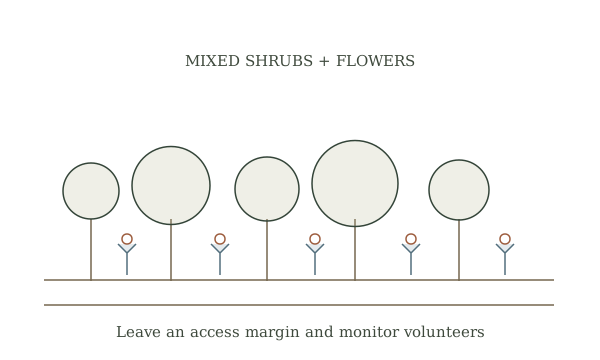
Use regional extension or conservation guidance for suitable native or non-invasive shrubs and perennial flowers. Aim for different bloom times and varied structure, while checking mature width and competition with crops. Do not copy a species list from another climate.
- 04
Prepare and establish
Mark planting zones and protect young plants from weeds, drought and browsing as locally appropriate. Mulch without piling material against stems. Record the species and date so future work distinguishes chosen plants from volunteers.
- 05
Maintain a living boundary
Walk the edge each season. Replace failures, remove invasive seedlings before they spread and observe whether flowers and cover actually persist. Avoid mowing every part at once when wildlife is using it, subject to local fire and access requirements.
Mistakes to avoid
- Calling a hedge a secure animal fence
- Planting a single ornamental species
- Clearing all existing habitat without inventory
If it isn’t working
Young plants are overtaken by weeds
Identify the competing plants and use a targeted, locally accepted control method while protecting desired seedlings.
The row shades a crop
Revisit mature size and placement; seek pruning or redesign advice rather than repeatedly topping shrubs.
Then & now
Historical context
Living field boundaries once supplied shelter and materials. Current habitat planning also considers pollinators, waterways and species that may escape cultivation.
The modern equivalent
Habitat plans and local plant databases help match bloom periods and site conditions.
Sources & review
Editorial draft — specialist review pending. Written 2026-09-28. Sources support the stated scope; this page has not been professionally certified.
- University of Minnesota Extension — Habitat for pollinators on fruit and vegetable farms ↗
Hedgerows, flowering plants and invasive-plant management. Checked 2026-09-28.
- University of Minnesota Extension — Selecting trees and shrubs for windbreaks ↗
Plant diversity and local site suitability. Checked 2026-09-28.