Why it matters
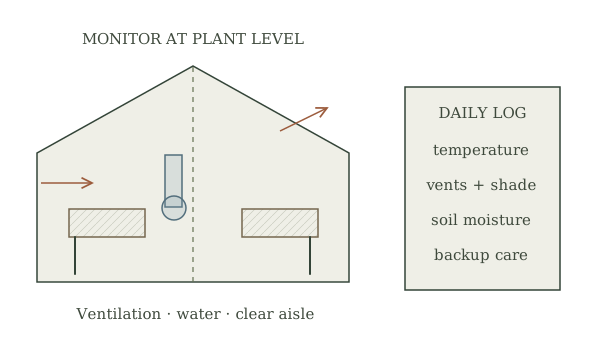
A greenhouse creates a managed environment, not automatic year-round growing. The practical work is coordinating light, ventilation, water and daily attention. A simple observation log helps expose overheating and cold zones before valuable plants are committed.
What you’ll need
Tools
- Thermometer with minimum and maximum readings
- Notebook
- Tape measure
- Hygrometer, if available
Materials
- Manufacturer’s instructions for the chosen greenhouse
- Local crop guidance
- Site and utility information
Before this skill
- Garden Planning
Before you begin
Safety & limits
- Use a structure assessed for local wind and snow loads with safe glazing and proper anchoring. Stay off roofs and keep clear of damaged panels. Electrical, plumbing and heating work require qualified installation and local approvals. Never improvise an unvented fuel heater. This guide supplies no structural or heater-sizing specification.
Work carefully, in order
The method
- 01
Define the growing season
List crops, their temperature needs and the weeks when protection is useful. Decide whether the goal is seedling production, season extension or overwintering. Record who can check the structure every day. Use that brief to compare a greenhouse with simpler protection such as a cold frame.
- 02
Map the site and services
Observe seasonal shade, access and drainage on a site sketch. Mark water supply, safe electrical provision if required, door swing and the route for moving trays. Ask the supplier or designer to assess exposure and local requirements before choosing a model. Keep roof runoff away from working areas.
- 03
Review the complete system
Record the selected frame, covering, anchoring, vents and any shading or heating equipment. Confirm how they work together and what daily operation is required. Follow the approved installation instructions rather than copying dimensions from another climate. Obtain qualified help for services and structural questions.
- 04
Commission before filling
In a safely installed greenhouse, place a thermometer where it measures conditions around the plants rather than touching hot glazing. Record morning, sunny midday and evening readings over several representative days. Compare different bench positions and note the weather. Use these observations to identify questions for the supplier.
- 05
Operate ventilation and watering
Use the installed ventilation and shading as the crop and measured conditions require. Check the growing medium directly before watering. Keep paths and vents clear and avoid crowding benches. Even a cold day can produce overheating in sun; automatic devices still need inspection and a backup plan.
- 06
Keep a routine and contingency plan
Record daily checks, seasonal cleaning and inspection of coverings and fasteners. Arrange care during absences and plan for power loss, failed vents and unsuitable temperatures. Bring sensitive plants to appropriate protection when the structure cannot maintain their required conditions. Review the log before expanding the crop list.
Mistakes to avoid
- Choosing a structure before deciding its use
- Treating an automatic vent as a complete backup plan
- Ignoring temperature differences between benches
If it isn’t working
The greenhouse overheats
Check the measured conditions, ventilation and shading promptly; ask the supplier to assess capacity if the installed system cannot cope.
Cold spots persist
Map readings and review the layout and heating plan with a qualified specialist rather than adding an improvised heater.
Then & now
Historical context
Protected structures helped gardeners raise seedlings and grow tender plants. Their operation depended on the local season and attentive care, even before automated vents and sensors.
The modern equivalent
A locally suitable greenhouse with monitored conditions, safe services and an operating plan.
Sources & review
Editorial draft — specialist review pending. Written 2026-09-30. Sources support the stated scope; this page has not been professionally certified.
- University of Georgia Extension — Hobby Greenhouses ↗
Site, access, ventilation, shading and operating considerations; historical prices and construction dimensions are not specifications here. Checked 2026-09-30.


