Why it matters
Packing wet shelter fabric or insulation for weeks encourages odors, mildew and coating deterioration. A wet trip often ends at home, where the equipment needs attention before storage.
What you’ll need
Tools
- Drying line or rack
- Soft brush
- Manufacturer care labels
Materials
- Breathable storage bag
- Clean dry shelf
Before this skill
- Campsite Selection
Before you begin
Safety & limits
- Do not dry coated fabric against a heater or open flame. Follow maker care instructions, especially for waterproof coatings, down and electronic devices.
Work carefully, in order
The method
- 01
Separate at camp
Keep soaked fabric away from dry insulation and food during the return. A temporary wet bag is for transport only; plan a drying space before sealing anything for storage.
- 02
Unpack promptly
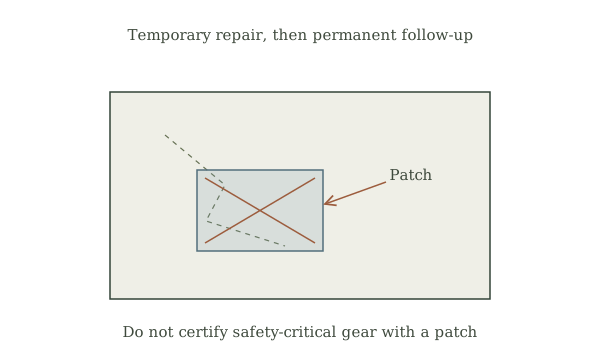
At home, empty pockets and inspect seams, poles, cord, boots and batteries. Record damaged pieces while you still remember how the failure happened.
- 03
Clean by material
Brush off grit and use the mild products the maker permits. Avoid harsh detergents and improvised waterproofing chemicals that may damage coatings.
- 04
Dry completely
Air fabric and components out of direct high heat, opening folds and pockets. Confirm hidden seams, guylines and storage sacks are dry before closing.
- 05
Store loosely and check
Use a dry ventilated location and loose storage where the product calls for it. Set a pre-trip inspection reminder and keep batteries as recommended by their maker.
Mistakes to avoid
- Leaving a tent in its wet compression sack
- Assuming the outside is dry while seams remain damp
- Storing a damaged item without a repair note
If it isn’t working
A coating feels sticky
Consult the maker or a repair specialist; do not heat or solvent-wash it.
Mildew or odor remains
Recheck cleaning and complete drying using product guidance; retire compromised equipment if necessary.
Then & now
Historical context
Travelers historically aired fabric, hides and rope; modern coated fabric and insulated gear also require product-specific cleaning and drying.
The modern equivalent
Purpose-built drying racks and breathable storage bags make the same inspection and drying sequence easier.
Sources & review
Editorial draft — specialist review pending. Written 2026-09-24. Sources support the stated scope; this page has not been professionally certified.
- REI Co-op — How to Store a Tent ↗
Cleaning, complete drying and loose storage of shelter fabric. Checked 2026-09-24.
- REI Co-op — Tent Repair ↗
Temporary fabric, zipper and pole repair and permanent repair limits. Checked 2026-09-24.