Why it matters
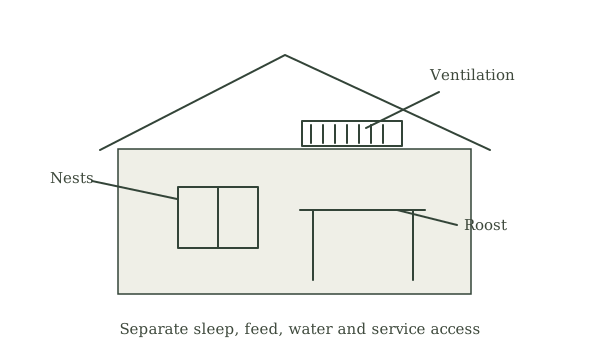
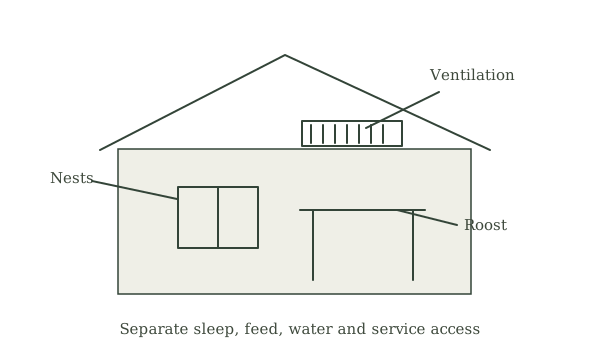
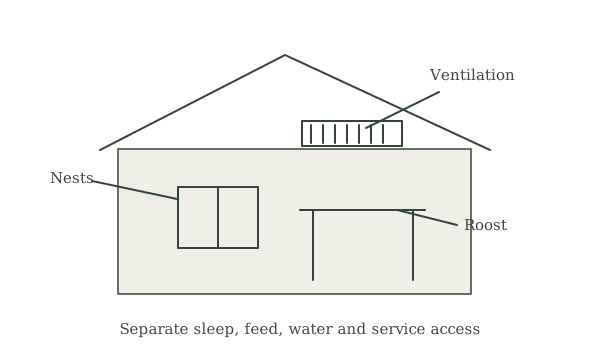
Egg handling begins in the nest. Dry bedding reduces contamination and damage before the shell reaches your kitchen. Appearance and floating behavior do not establish microbiological safety; handling records are more useful than folk tests.
What you’ll need
Tools
- Clean collection basket
- Refrigerator thermometer
Materials
- Clean egg cartons
Before you begin
Safety & limits
- Use pasteurized eggs for foods served raw or lightly cooked. Do not recommend water-glassing as a verified modern storage method.
Work carefully, in order
The method
- 01
Prepare before collecting
Wash hands and use a clean basket reserved for eggs. Replace fouled nesting material rather than repeatedly collecting from a dirty surface. Keep eggs separate from feed scoops, manure tools, and footwear used in the run.
- 02
Collect gently
Collect frequently enough to avoid eggs accumulating, especially in hot or freezing conditions. Lift eggs individually and avoid piling them into a deep bucket. Set visibly cracked or heavily soiled eggs aside for disposal rather than trying to restore them for storage.
- 03
Choose a clear handling policy
Follow your local public-health guidance on washing home-produced eggs. Do not soak eggs or improvise cold-water washing. Different jurisdictions use different systems; do not combine unrefrigerated traditions with a washed-egg cold chain.
- 04
Refrigerate and label
For this guide, refrigerate promptly at 4°C/40°F or colder in clean cartons. Write the collection date and use older eggs first. Store in the main refrigerator compartment, and maintain cold storage when transporting them.
- 05
Review abnormalities
Record repeated soft shells, blood-stained shells, sudden changes in laying, or signs of illness in birds. Ask a poultry veterinarian about patterns rather than diagnosing from a single egg. Use proper cooking guidance; freshness alone cannot make raw eggs risk-free.
Mistakes to avoid
- Using the float test as a safety test
- Mixing dated and undated batches
- Returning cracked eggs to a carton
If it isn’t working
Frequent dirty eggs
Improve nest cleanliness and stocking conditions.
Refrigerator is warm
Verify with a thermometer and obtain food-safety advice about affected eggs.
Then & now
Historical context
Historic egg-storage systems reflected local conditions and preceded modern pathogen knowledge; their age does not establish safety.
The modern equivalent
Commercial eggs with an intact cold chain simplify traceability.
Sources & review
Editorial draft — specialist review pending. Written 2026-09-20. Sources support the stated scope; this page has not been professionally certified.
- FDA — egg safety ↗
Supporting reference; see the original for its complete procedure. Checked 2026-09-20.
- CDC — backyard poultry ↗
Supporting reference; see the original for its complete procedure. Checked 2026-09-20.