Why it matters
A calmer coal bed may offer more even heat than active flame, yet appearance and elapsed time cannot show whether meat has reached a safe internal temperature.
What you’ll need
Tools
- Stable approved cooking grate or pot support
- Long tools
- Food thermometer
- Water
Materials
- Food kept at safe temperature
- Approved fuel
Before this skill
- safe-match-fire
- food-thermometers
- kitchen-hygiene
Before you begin
Safety & limits
- Cook outdoors only in a permitted site. Never bring charcoal, grills or smoldering coals into a tent, vehicle or room. Keep children clear of hot equipment and follow USDA temperatures for animal foods.
Work carefully, in order
The method
- 01
Plan both fire and food
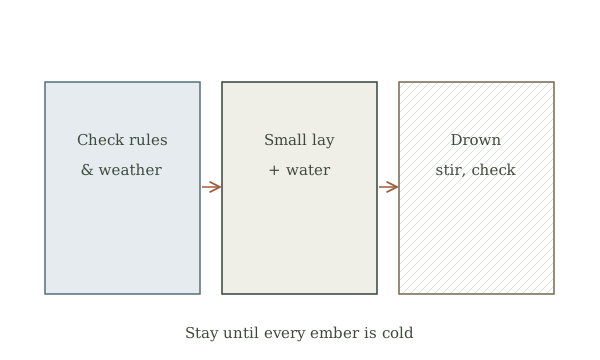
Check site rules and the approved cooking apparatus. Keep raw and ready-to-eat food separate, maintain a cold chain and set out clean tools and a thermometer.
- 02
Wait for a stable bed
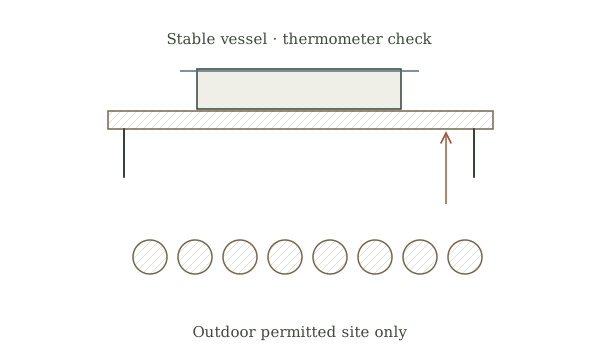
Let a modest fire burn down under continuous supervision. Use a stable grate or vessel designed for heat; avoid balancing pots on improvised supports.
- 03
Manage heat without guessing
Move the vessel relative to the heat using suitable tools. Watch for flare-ups and uneven heating rather than treating glowing color as an exact temperature scale.
- 04
Verify the food
Measure the thickest part of animal foods with a clean thermometer and use the USDA chart for the specific product. Color, clear juices and cooking time are unreliable safety tests.
- 05
Extinguish and pack out
Keep the cooking site attended until the coals are completely cold by the site's water-and-stir guidance. Cool and store leftovers within food-safety limits.
Mistakes to avoid
- Cooking inside a shelter
- Equating brown color with safe temperature
- Leaving buried coals warm
If it isn’t working
Outside browns too quickly
Move the food farther from the heat and verify the center with a thermometer.
No safe way to support the vessel
Choose a suitable stove or no-cook meal instead.
Then & now
Historical context
Hearth cooking often moved pots beside embers or over a mature bed of coals; modern food safety adds thermometer verification.
The modern equivalent
An outdoor camp stove offers a controllable flame when local rules allow it.
Sources & review
Editorial draft — specialist review pending. Written 2026-09-27. Sources support the stated scope; this page has not been professionally certified.
- National Park Service — Campfires ↗
Supporting reference; follow the original and local rules for complete instructions. Checked 2026-09-27.
- USDA FSIS — Food Safety While Hiking, Camping & Boating ↗
Supporting reference; follow the original and local rules for complete instructions. Checked 2026-09-27.
- USDA FSIS — Safe Minimum Internal Temperature Chart ↗
Supporting reference; follow the original and local rules for complete instructions. Checked 2026-09-27.
- Smokey Bear — Campfire safety ↗
Supporting reference; follow the original and local rules for complete instructions. Checked 2026-09-27.